

Interest rates rise.
The company has not reported earnings.
Revenue estimates have not changed.
Nothing happened to the product.
Yet the stock falls 6%.
What changed?
Often, the answer is not the business itself.
It is the price investors are willing to pay for the same future earnings.
That is why interest rates matter for equities even when nothing company-specific has happened.
A yield does not tell you what stocks should do. It tells you that the price of capital has changed.
Start with the risk-free rate
Investors are always comparing one return with another.
A U.S. Treasury security is often used as a reference because it offers a contractual return backed by the U.S. government.
Suppose a 10-year Treasury yields:
3%
and later rises to:
5%
The equity market now has to compete with a higher return available from a lower-risk asset.
That does not mean investors immediately sell every stock.
But it changes the hurdle.
If an investor could earn 5% from a Treasury, the expected return required from a risky asset may also need to rise.
And when the required return rises, the price investors are willing to pay for future cash flows can fall.
This is the first transmission mechanism:
Higher risk-free rate → higher required return → lower present value, all else equal
The phrase all else equal matters.
Markets are rarely holding everything else constant.
Future earnings are worth less when the discount rate rises
A stock represents a claim on future cash flows.
The further those cash flows sit in the future, the more their value depends on the rate used to bring them back to today.
The intuition is simple.
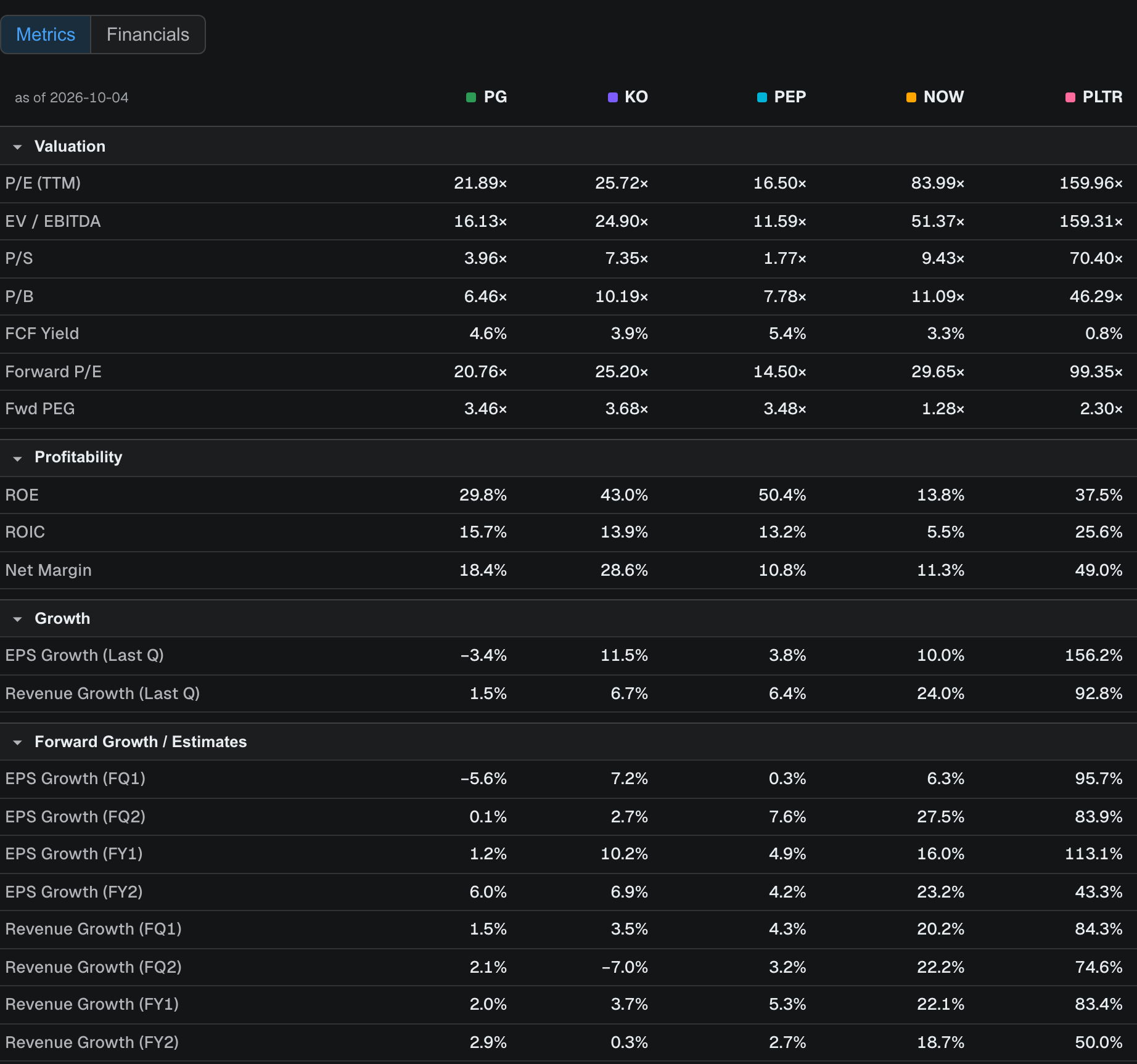
Imagine being offered:
$100 today
or:
$100 five years from now
Those two amounts are not worth the same.
If interest rates are very low, waiting five years has a smaller opportunity cost.
If safe yields are much higher, waiting becomes more expensive.
This is why a change in the discount rate can affect valuation even when expected earnings do not change.
A company could still be expected to earn exactly the same amount.
But the market may assign a lower multiple to those earnings.
This is one reason P/E ratios can compress when yields rise.
The earnings can stay the same while the price paid for those earnings changes.
That is a valuation change, not necessarily a business change.
Some equities behave like longer-duration assets
Not every company is equally sensitive to changes in interest rates.
Consider two simplified businesses.
Company A
Most of its expected cash generation is happening now.
It is profitable, mature and produces significant free cash flow today.
Company B
Most of its expected value comes from growth several years into the future.
It may be reinvesting heavily today because the market expects much larger earnings later.
If the discount rate rises, those distant cash flows can be affected more.
That is why investors sometimes describe high-growth equities as having more duration.
The concept is not identical to bond duration.
But the intuition is useful:
The more of a stock’s value depends on distant future cash flows, the more sensitive that valuation can be to changes in the discount rate.
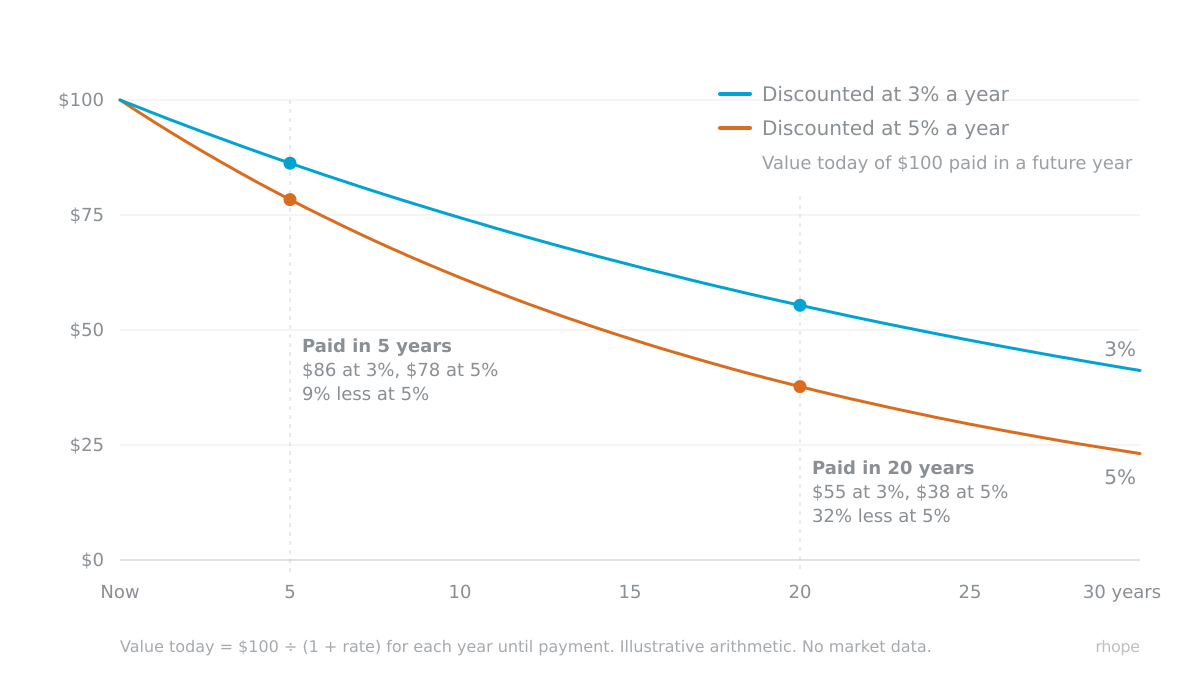
This helps explain why a sharp move in yields can sometimes hit long-duration growth stocks more than mature cash-generating businesses.
But it is not a rule.
If growth expectations improve enough, stronger expected earnings can offset some or all of the valuation pressure.
Rates also change the economics of the business
Interest rates do not affect only valuation.
They can affect the company itself.
Higher rates can mean:
more expensive debt refinancing;
higher interest expense;
a higher cost of issuing new debt;
more expensive mortgages and consumer credit;
weaker demand in rate-sensitive industries;
a higher hurdle rate for new projects and acquisitions.
The impact depends heavily on the business.
A company with:
little debt;
strong free cash flow;
high margins;
limited refinancing needs;
may be less directly exposed.
A highly leveraged company that needs to refinance large amounts of debt may be much more sensitive.
The same applies across industries.
Housing, autos, commercial real estate and other credit-sensitive areas can react differently from businesses that depend less on financed demand.
So when yields move, there are really two questions:
What does this do to the valuation?
and:
What does this do to the business?
Those are related.
They are not the same thing.
Higher rates do not automatically mean lower stocks
This is where the simple explanation starts to break down.
Suppose the 10-year Treasury yield rises because economic growth is improving.
Stronger growth could mean:
better revenue;
stronger earnings;
more investment;
lower recession risk.
In that case, the market is balancing:
a higher discount rate
against:
better expected cash flows
Stocks could still rise.
Now imagine yields rise because inflation is accelerating and investors expect tighter monetary policy.
That is a different setup.
The market may face:
higher discount rates;
higher input costs;
tighter financial conditions;
more uncertainty around policy.
The same move in the 10-year yield can therefore carry very different information.
This is why the question:
Are rising yields bearish for stocks?
is too broad.
A better question is:
Why are yields rising, and what else is changing at the same time?
Nominal yields are only part of the story
A Treasury yield can move because of several underlying forces.
Very broadly, nominal yields reflect a combination of:
expected inflation;
expected real interest rates;
term premium;
growth expectations;
monetary-policy expectations;
supply and demand for government bonds.
For equities, real yields can be especially useful to watch because they give a rough sense of the return available after accounting for expected inflation.
If nominal yields rise only because inflation expectations are rising, the signal is different from a rise driven mainly by higher real rates.
That distinction can matter for valuation.
It can also matter for:
gold;
the U.S. dollar;
credit;
housing;
long-duration equities.
The headline yield is useful.
The composition of the move can tell you more.
Watch the reaction across markets
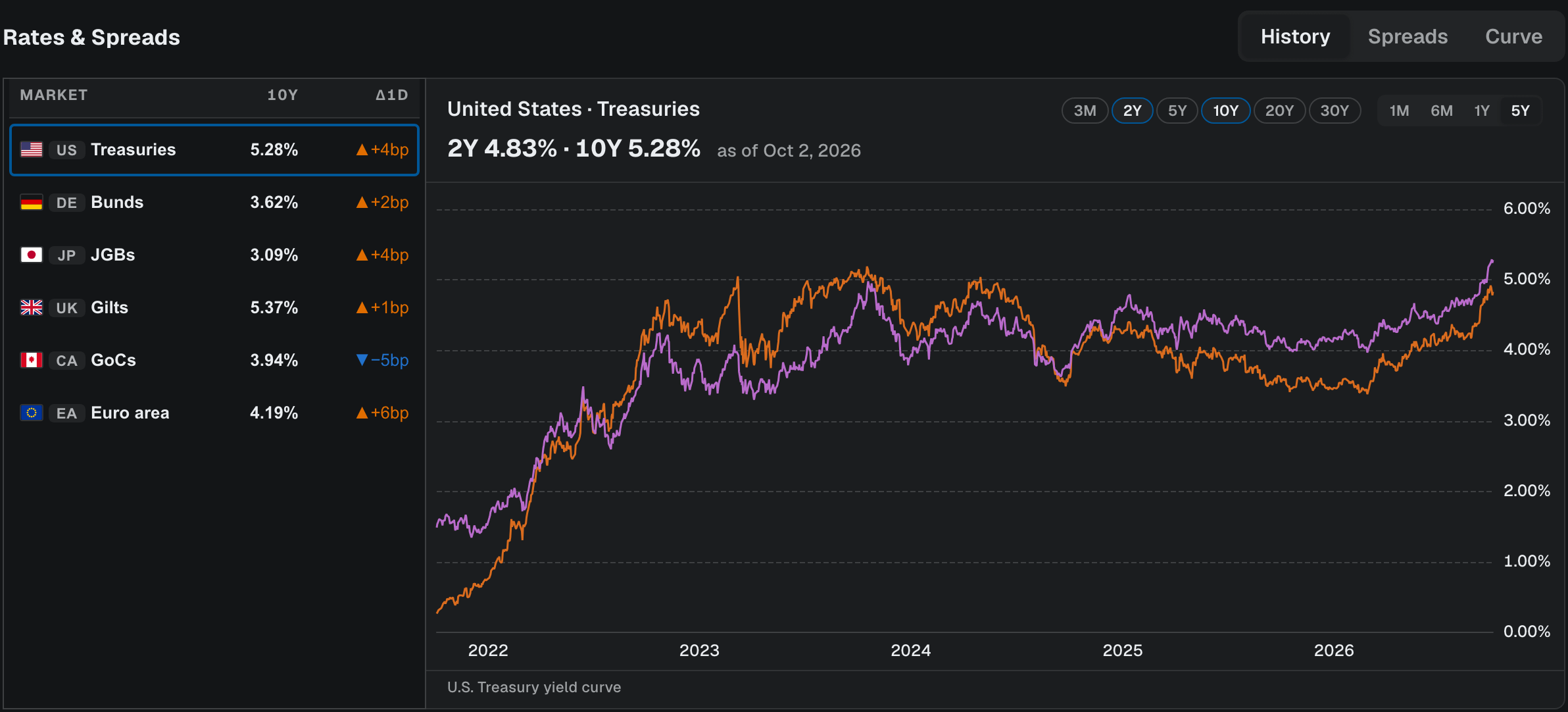
A rate move becomes easier to interpret when you look at what else is moving.
For example:
Yields up + equities up
The market may be leaning toward stronger growth or better earnings expectations.
Yields up + equities down
The increase in the discount rate or financial conditions may be dominating.
Yields up + dollar up
Markets may be repricing relative interest rates or policy expectations.
Yields up + credit spreads wider
The move may be happening alongside growing stress or tighter financial conditions.
Yields down + equities down
Lower yields are not always bullish either.
They can reflect falling growth expectations or a flight to safety.
This is why rates work better as part of a market cluster than as an isolated signal.
The number matters.
The surrounding reaction tells you how the market is interpreting it.
Rates change the hurdle
Interest rates matter because they sit underneath a large part of financial valuation.
They influence:
the return available from safer assets;
the discount rate applied to future cash flows;
corporate borrowing costs;
consumer financing;
investment decisions;
valuation multiples.
But a higher yield does not mechanically produce a lower stock price.
The effect depends on:
why the yield moved;
how far into the future the company’s value sits;
whether earnings expectations are changing;
how much debt the company carries;
whether the broader economy is strengthening or weakening.
A useful framework is:
Rates change the hurdle. Growth and cash flows determine whether the business can clear it.
That is why the same company can trade at very different multiples in different rate environments without the underlying business changing overnight.
The business matters.
So does the price of capital around it.
I write these notes to explain how the numbers and tools in the workspace are made, how to read them, and where they fit — never to tell you where a market or a stock will go.
Continue with rhope
Open Macro →
View Market Overview →
Find a stock →
Compare companies →
Sources
The worked examples and the present-value chart are illustrative arithmetic. None is a quote for any security.
Screenshots show company figures and Treasury yields as displayed in the rhope workspace. Treasury yields are from the U.S. Treasury yield curve.
Descriptive only — nothing here is investment advice, a recommendation, or a trading signal. See our Terms.