

Growth Is Holding Up. The Cost of Growth Is Rising.
From leading economic indicators to sector, industry, and stock-level trading ideas for the next 2–4 months.
rhope Research
· October 17, 2026
· Horizon: October 2026–February 2027
Central question: Demand is proving more resilient than consumer sentiment suggests, but financing and input costs are climbing. Which businesses could turn that divergence into better earnings—and which might struggle?
Macro Landscape - Where We Are
The starting point is the economic data, without a predetermined bullish or bearish market view.
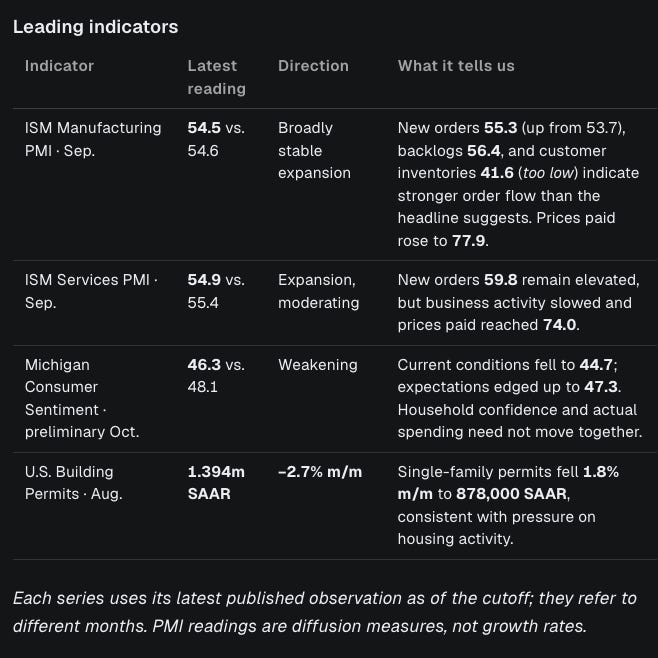
Confirmation and market context
Financing: The 30-year U.S. mortgage rate reached 7.40% on October 8, raising the hurdle for new-home purchases and construction.
Demand versus costs: Manufacturing orders and services activity remain expansionary even as their input-price indexes rise sharply.
Households: Consumer sentiment is very weak, but it is not a direct measure of realized consumption; income segments and industry demand can diverge.
Uncertainty: Strong manufacturing orders could reflect a durable restocking cycle or purchases pulled forward ahead of higher costs and supply disruptions.
Neutral macro read: The available indicators point to ongoing activity with unusually pronounced cost and financing pressure. They do not establish a broad-market direction. The most useful research angle is the potential dispersion in company earnings beneath that aggregate picture.
1. Theme One - The Industrial Inventory Squeeze
Potential stock idea: LONG WCC (Wesco International)
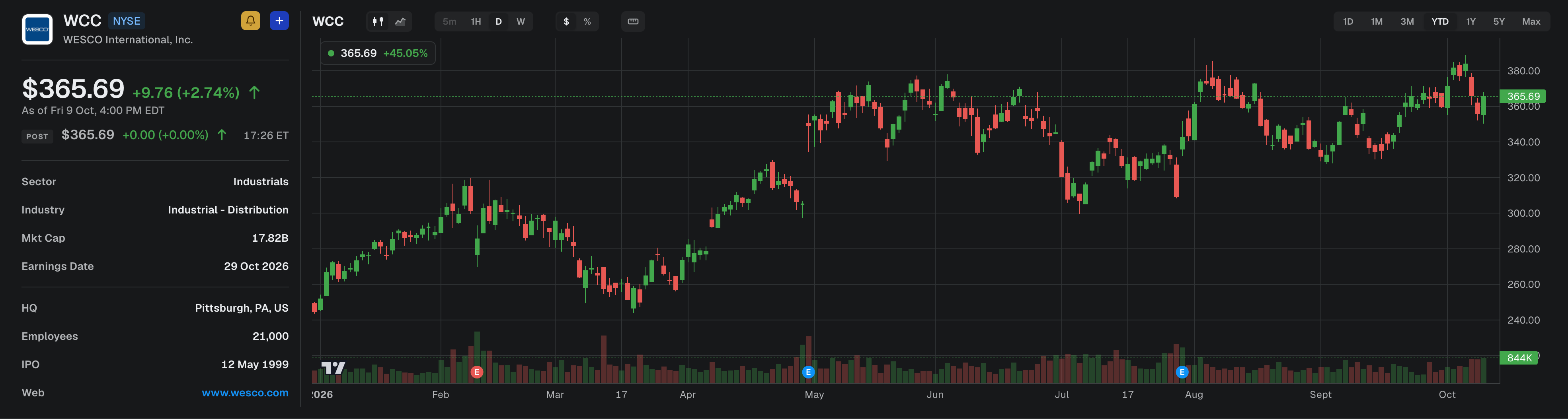
From macro to stock
Macro → September manufacturing new orders strengthened, backlogs rose, and customers’ inventories remained too low. The combination may indicate replenishment demand—but could also reflect order pull-forward.
Sector → Industrials. A demand recovery can reach distributors before it appears in broad industrial output. Higher input prices, however, can weaken the economics of that recovery.
Industry → Electrical and industrial distribution. Distributors with access to constrained electrical components, power equipment and supply-chain services may benefit from availability and order conversion. The question is whether they can preserve margins and cash flow.
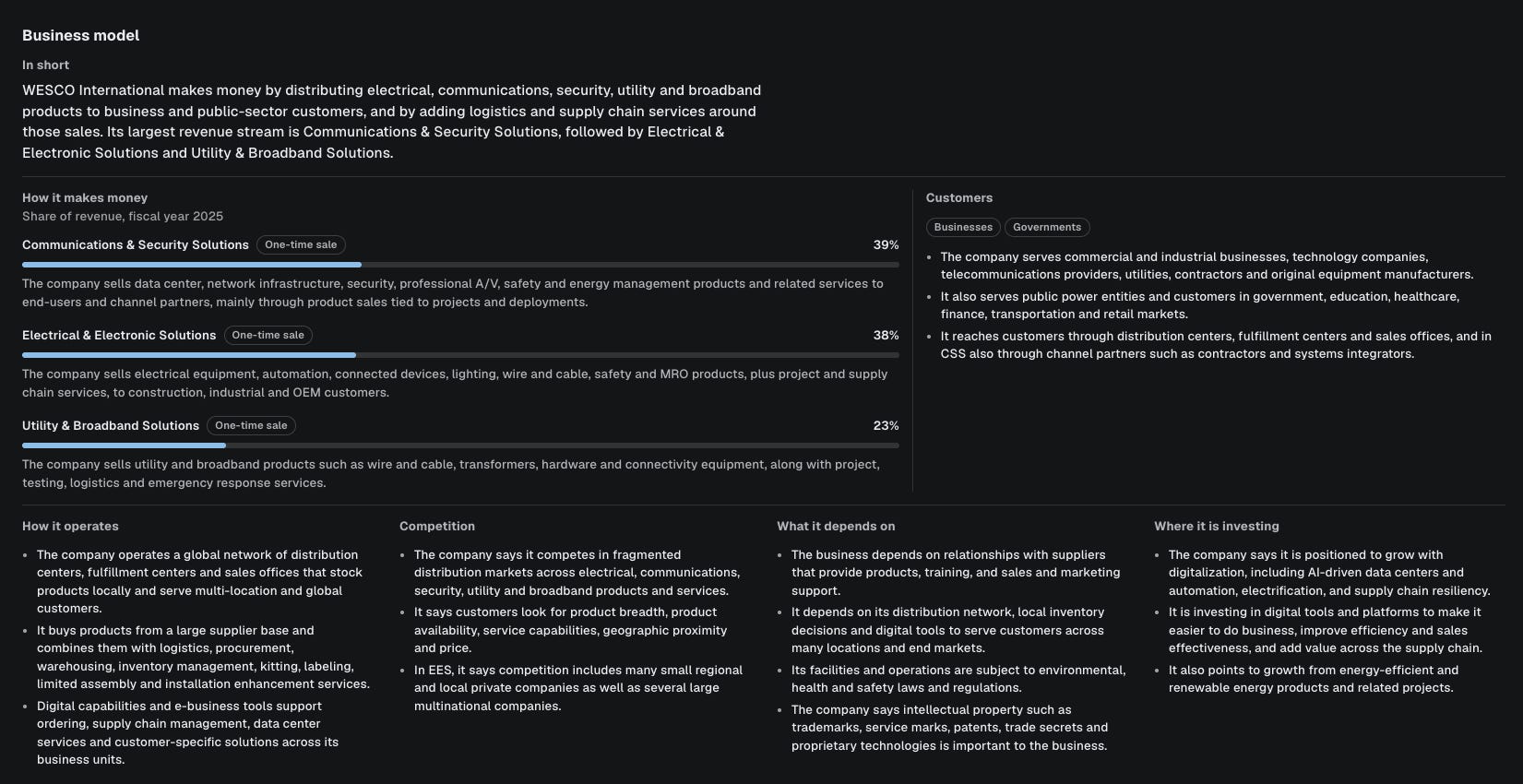
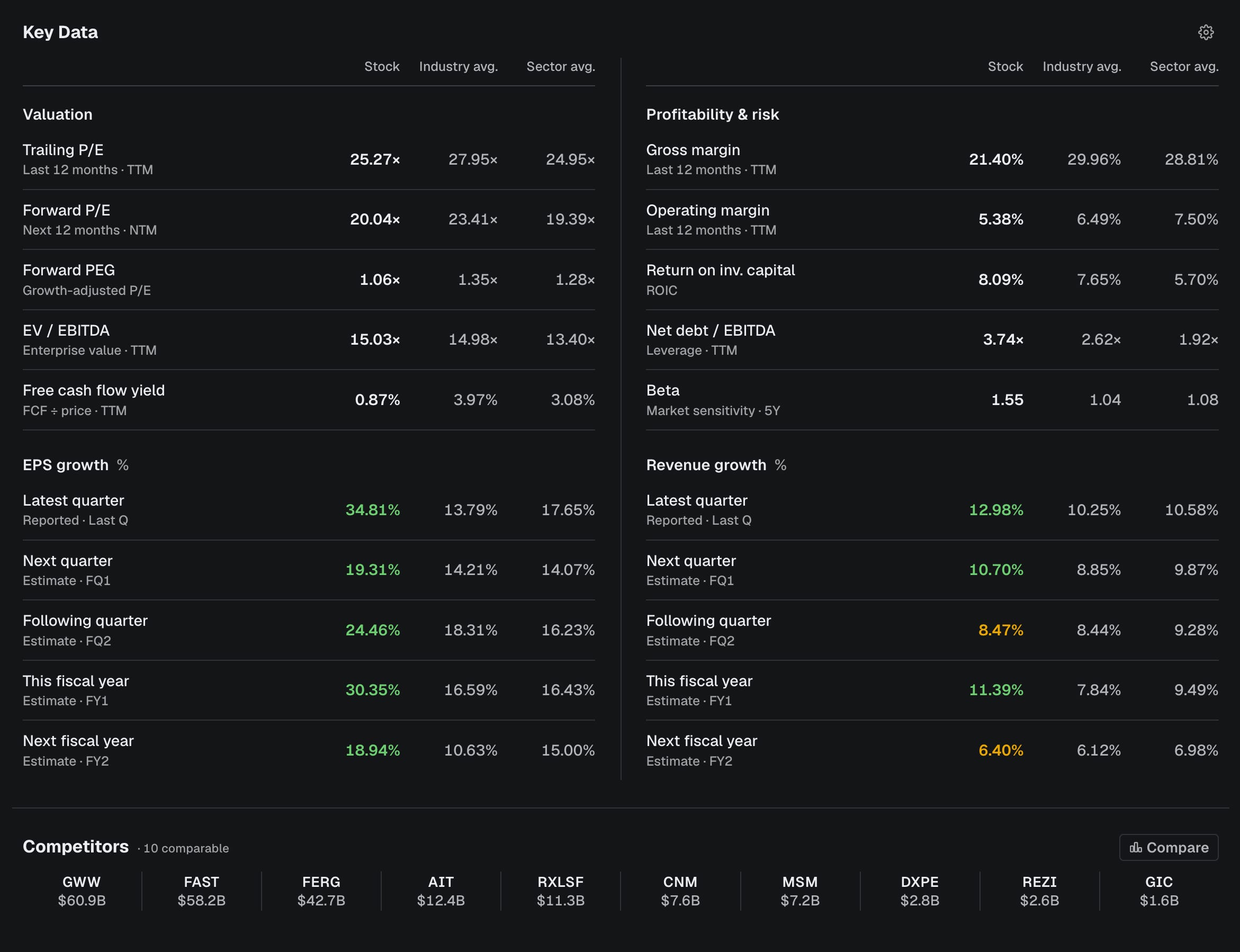
Stock → Wesco International (WCC). In Q2 2026, Wesco reported $6.7bn in revenue (+13% y/y), $1.5bn in data-center sales (~+45% y/y) and a backlog ~60% higher y/y. Adjusted EBITDA margin rose to 7.3%. This is evidence of strong execution—but also proof that much of its growth is tied to the already prominent AI infrastructure cycle.
Trade thesis - WCC | Long
As of: October 9, 2026
Horizon: 2–4 months
Thesis
Wider industrial and grid orders, beyond AI data centers, could convert Wesco’s backlog into earnings and cash flow faster than expected.
Why now
Low customer inventories and stronger ISM orders coincide with October 29 Q3 earnings and a November 10 data-center deep dive, according to the company schedule.
Non-consensus angle
The potential surprise is breadth beyond AI, rather than another headline about AI infrastructure spending.
Evidence
For: Rising macro orders and backlogs; strong Wesco sales, company backlog and margin.
Against: A large data-center contribution, possible order pull-forward and modest Q2 free cash flow relative to sales.
Transmission mechanism
More diversified orders → shipments and gross profit → earnings revisions, provided pricing and working-capital conversion hold.
Potential expression
Long WCC equity as a research hypothesis. A call spread is an alternative only if its pricing and expiry support the underlying thesis.
Catalysts
Q3 earnings, non-data-center organic growth, backlog conversion, working capital and October/November ISM components.
Counterargument / invalidation
AI concentration is already valued richly; non-AI orders stagnate, backlog cancels, or input costs overwhelm margin and cash conversion.
Asymmetry
Would depend on the gap between non-AI earnings revisions and current valuation. Not quantified without a verified entry price and consensus estimates.
Scenario test
Bull
Broader orders convert; margins and cash flow improve; forecasts rise.
Base
AI demand stays strong; other industries remain stable; little earnings surprise.
Bear
Restocking proves temporary; margins or backlog weaken; expectations reset lower.
2. Theme Two - When the Fuel Profit Transfer Reverses
Potential stock idea: LONG DAL (Delta Air Lines)
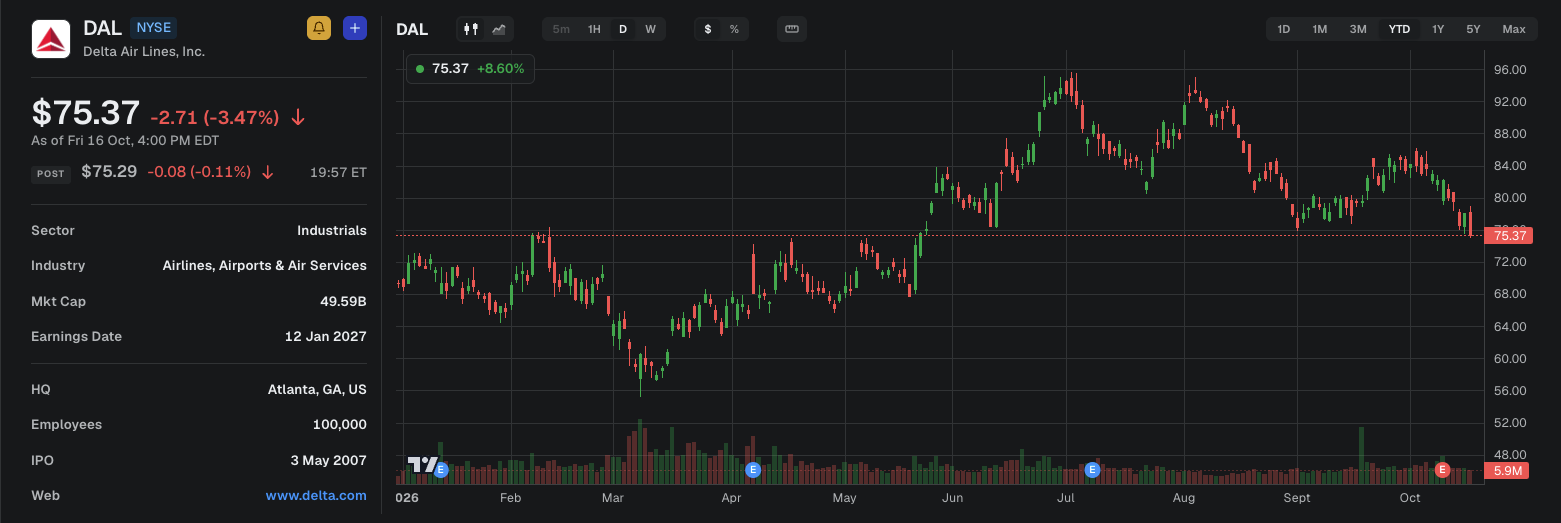
Related opposite exposure to study: SHORT a refiner such as VLO, but only as a separately underwritten thesis—not an assumed perfect hedge.
From macro to stock
Macro → Strong services orders coexist with rising prices paid and weak household sentiment. Energy and refined-product costs help explain why nominal activity can remain resilient while profit margins tighten.
Sector → Consumer Discretionary / Energy. The same supply disruption can hurt fuel-consuming transport businesses and support firms that sell refined products.
Industry → Airlines versus refining. What matters is not simply the crude-oil price: jet-fuel prices and product crack spreads can change airline and refinery profitability in opposite ways. A reversal in refined-product scarcity could move both earnings expectations.
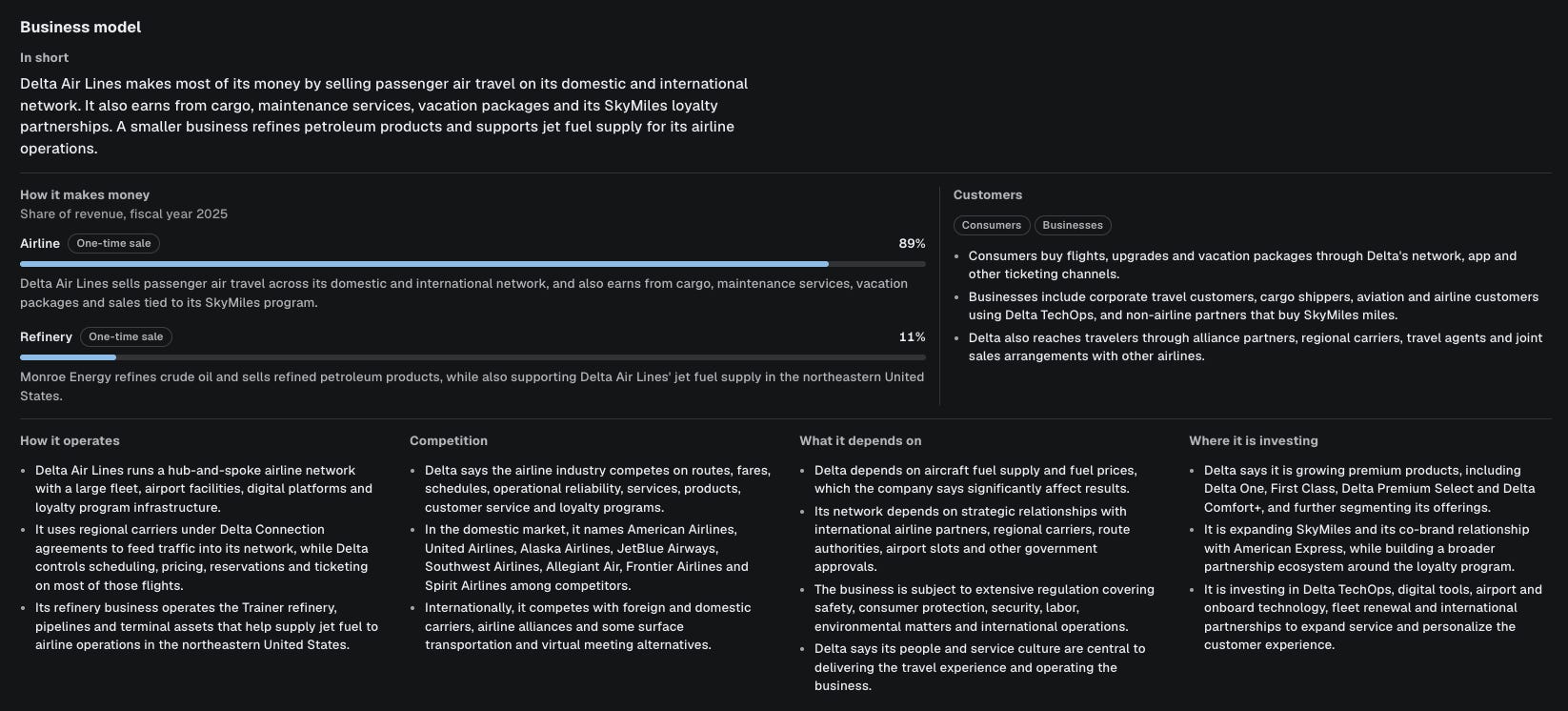
Stock → Delta Air Lines (DAL). Delta’s October 9 Q3 release reported record revenue and resilient travel demand, but much higher fuel costs. Its 2026 EPS outlook is $5.10–$5.60, showing that strong demand alone is not enough to protect earnings from fuel inflation.
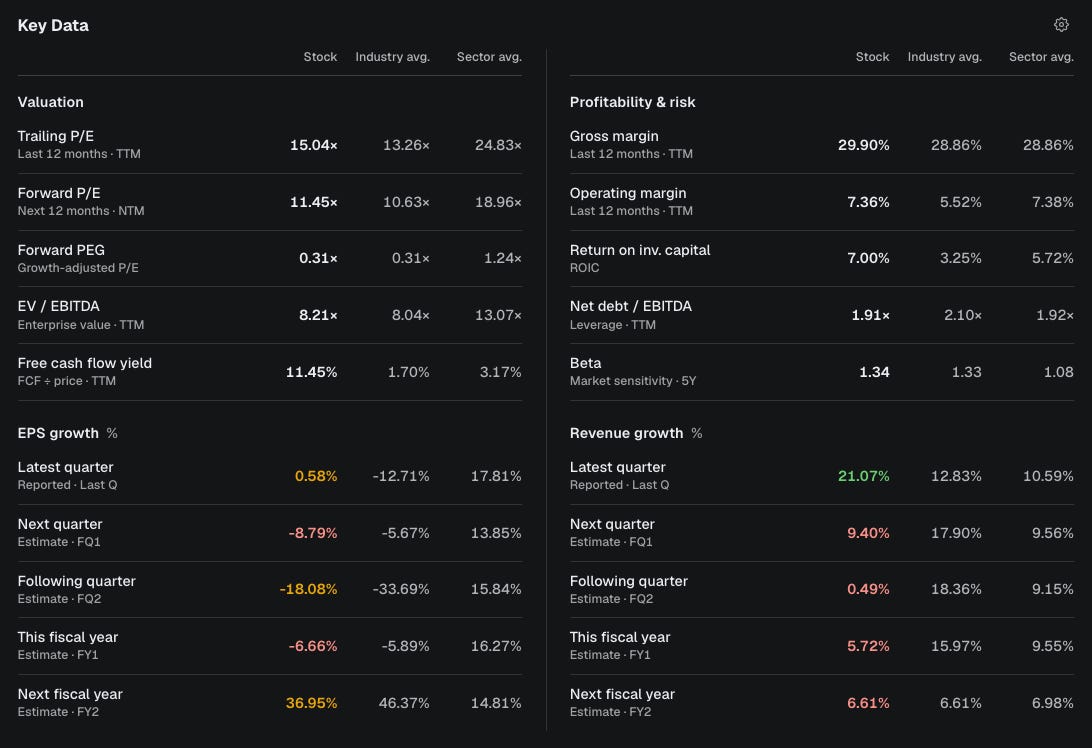
Trade thesis - DAL | Long
As of: October 9, 2026
Horizon: 2–4 months
Thesis
If jet-fuel costs normalize faster than passenger yields deteriorate, Delta’s earnings outlook could recover despite weak aggregate consumer sentiment.
Why now
Delta’s Q3 update has exposed the magnitude of its fuel sensitivity, while premium travel demand remains an offsetting support.
Non-consensus angle
The opportunity would come from fuel-cost relief plus persistent yield strength, rather than a generic bet that oil falls or travel demand rises.
Evidence
For: Record Q3 revenue and resilient premium demand.
Against: Sharply higher fuel expense, reduced EPS outlook, volatile refined-product supply and uncertain timing.
Transmission mechanism
Lower delivered jet-fuel prices → reduced unit costs → improved operating margins and earnings estimates, provided airfares hold.
Potential expression
Long DAL equity as a conditional hypothesis. Separately examine a short VLO leg if refinery margins and relative valuations support it.
Catalysts
Jet-fuel prices and crack spreads, refining capacity and inventory data, airline fare trends, guidance revisions and the next earnings cycle.
Counterargument / invalidation
Fuel scarcity persists, prices rise further, or competitive airfare declines absorb any fuel savings. Delta’s own refinery also complicates a simple fuel-price sensitivity.
Asymmetry
Potentially interesting only if expectations embed prolonged high fuel costs while fuel prices begin to fall. Not quantified without valuation, fuel sensitivity and implementation costs.
Scenario test
Bull
Jet fuel falls, ticket yields hold; margins and EPS expectations rebound.
Base
Some fuel relief is offset by softer fares; limited change to profits.
Bear
Fuel costs remain high or worsen; demand softens; guidance faces further pressure.
3. Theme Three - Housing Is Not One Trade
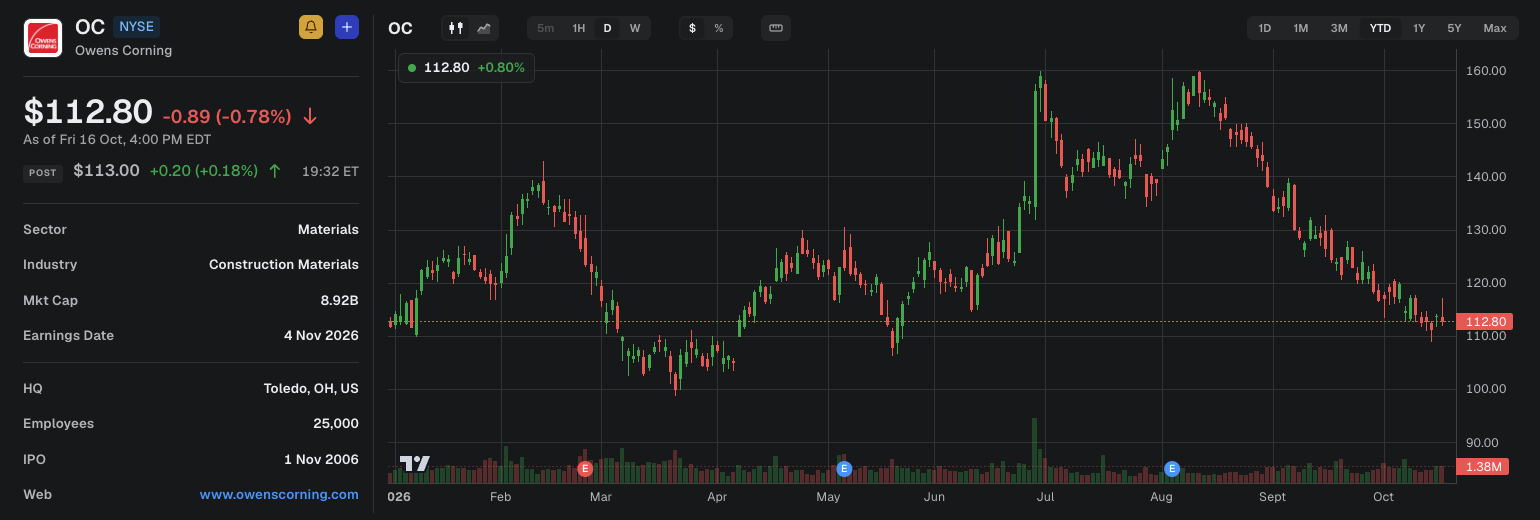
Potential stock idea: LONG OC (Owens Corning)
https://rhope.app/
Comparison universe: new-homebuilders such as KBH and PHM, or ITB; the businesses are not perfect substitutes.
From macro to stock
Macro → Building permits weakened, single-family permits fell, and mortgage financing reached 7.40%. This directly challenges new-home affordability, but not every housing-related expenditure has the same sensitivity to mortgage rates.
Sector → Industrials / housing-related equities. New construction and existing-home maintenance can follow different demand paths. A slowdown in home transactions does not automatically eliminate essential repairs.
Industry → Roofing and replacement materials versus new-home construction. A roof may need replacing even when a homeowner cannot justify moving. But roofing is still cyclical through repair timing, weather events, distributor stocks and material costs.
Stock → Owens Corning (OC). In Q2 2026, Roofing revenue was $1.313bn, compared with $1.303bn a year earlier, while roofing EBITDA margin slipped to 34% from 35%. The company also warned that distributor inventory buildup and roughly $40m in incremental Q3 inflation-related costs could weigh on results. Resilience is plausible, but not proven.
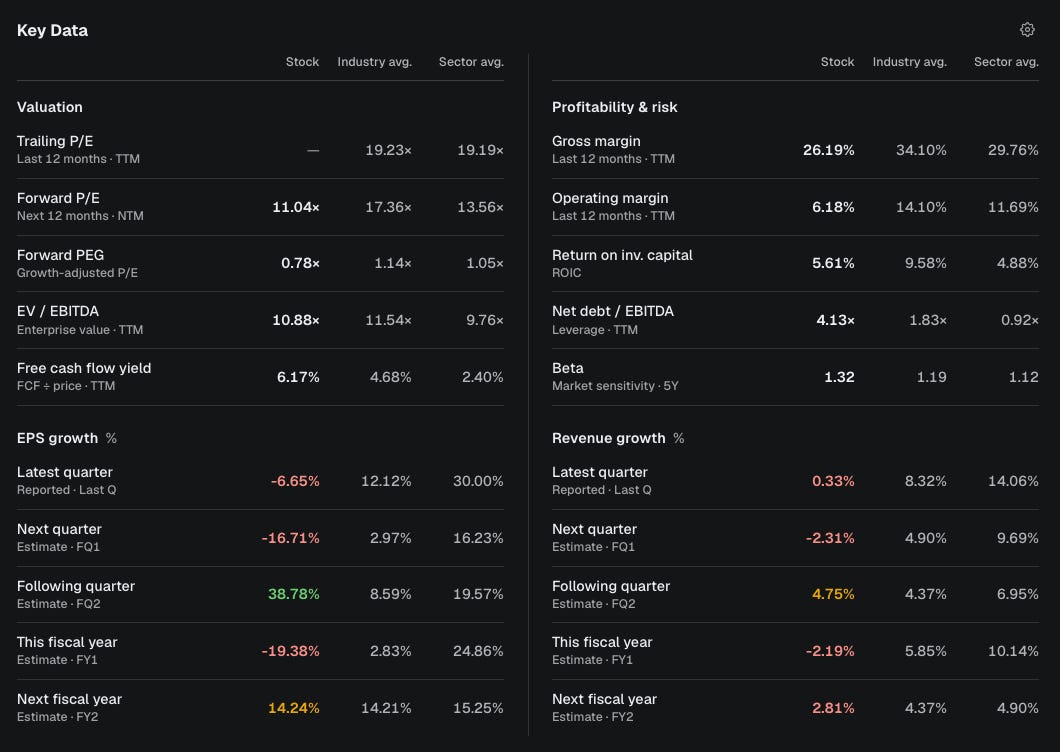
Trade thesis — OC | Long
As of: October 9, 2026
Horizon: 2–4 months
Thesis
Replacement-oriented roofing demand could prove more resilient than new-home construction, allowing Owens Corning to outperform housing expectations if volume and margins stabilize.
Why now
High mortgage rates and softer permits may amplify investors’ tendency to treat all housing-linked businesses alike, just as upcoming results will test repair demand.
Non-consensus angle
Separate financing-dependent new construction from maintenance-related replacement demand, then test whether the market has priced the difference.
Evidence
For: Q2 roofing sales held roughly flat despite housing pressure.
Against: A lower roofing margin, distributor destocking, commodity cost inflation and uneven storm demand.
Transmission mechanism
Stable replacement volumes and successful cost pass-through → more resilient roofing earnings than new-construction-sensitive peers → potential relative repricing.
Potential expression
Long OC equity as a hypothesis. Compare with KBH/PHM or ITB to assess relative sensitivity. A paired short would need independent valuation and factor analysis.
Catalysts
Roofing volume and sell-through, gross/EBITDA margins, housing permits, mortgage rates and company guidance.
Counterargument / invalidation
Replacement orders deteriorate, channels continue destocking, pricing fails to recover input inflation, or a rate decline drives a faster new-build rebound.
Asymmetry
Depends on whether stable roofing fundamentals are underappreciated relative to OC’s valuation. Not quantified without fresh price, earnings and peer comparisons.
Scenario test
Bull
Replacement demand stabilizes and costs ease; OC margins recover despite weak housing.
Base
Repairs hold but inflation and channel destocking constrain earnings.
Bear
Roofing slows too, margins compress, or new-homebuilders recover more quickly.
https://rhope.app/
These are original, falsifiable research hypotheses-not instructions to trade. No live quotes, option premiums, or numerical payoff ratios are implied. Any future valuation or trade-structure work should use timestamped pricing and the then-current company disclosures.